

Your cart
Your cart is empty
Welcome to VDR's latest news & guides
Expert guides on selling used IT and telecoms equipment, buying certified refurbished hardware, WEEE recycling and secure data centre decommissioning - insights from the UK's IT asset recovery specialists.

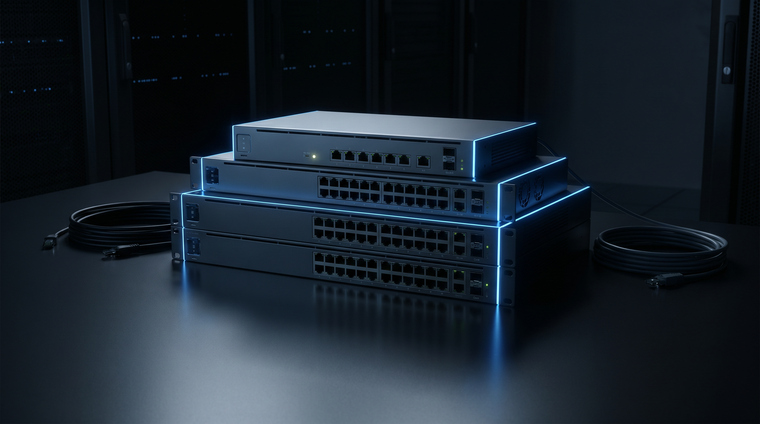
Data Centre Decommissioning: A Practical Guide For UK Businesses

The hardware is the easy part. The planning is what determines your return.
Every Data Centre Reaches This Point
Cloud migration completes. A lease ends. Two businesses merge and inherit three server rooms between them. A site consolidates, a colocation contract expires, or an estate simply reaches the end of its supported life.
However it arrives, the outcome is the same: racks of equipment that were business-critical last quarter and are now a logistics problem.
Data centre decommissioning is one of those projects that looks straightforward from a distance. Power everything down, pull it out, get it collected. In practice it touches compliance, data security, physical logistics, asset management and finance all at once, and it is usually run by people doing it alongside their actual job.
Done well, a decommission returns a meaningful sum to the business and closes cleanly with a full audit trail. Done badly, it becomes months of stored pallets nobody wants to deal with, with the value quietly draining away.
This guide sets out how UK organisations approach it properly.
What Usually Triggers A Decommission
Understanding the driver matters, because it dictates your timeline and how much flexibility you have.
- Cloud or hybrid migration completing
- Colocation or lease expiry with a hard exit date
- Site consolidation following a merger or acquisition
- End of vendor support on a hardware generation
- Office relocation or downsizing
- Energy efficiency and cost reduction programmes
- Replacement of an entire platform or estate refresh
A lease expiry gives you a fixed deadline and very little room to negotiate. A voluntary consolidation gives you months to plan and to time your recovery well. The second scenario almost always returns more.
The Single Most Expensive Mistake
Most organisations call an IT asset recovery partner after the equipment has been removed from the racks.
By then it is sitting on pallets in a corridor, stripped of its context. Nobody is certain which caddies came from which chassis. Rails and cable management are in a separate pile, or in a skip. Serial numbers were never captured. Two identical-looking servers had wildly different specifications and now nobody can tell them apart without powering each one up.
Every one of those factors reduces what the equipment is worth.
Complete, correctly configured systems with documented specifications are worth substantially more than an unidentified heap of the same hardware. The value was not lost during the sale. It was lost during the removal.
Engage your recovery partner before anything is unracked. That single decision has more effect on your return than any amount of negotiation afterwards.
Phase One: Audit And Asset Capture
Everything begins with knowing what you actually have. Not what the asset register says you have.
Capture, per device:
- Make, model and serial number
- Full specification, particularly processors, memory configuration and installed storage
- Rack and U position
- Ownership status - owned, leased or financed
- Whether it holds data
- Working condition where known
The ownership question catches people out regularly. Leased equipment cannot be sold, and discovering this after collection is a genuinely difficult conversation. Confirm it early.
Photographs are enormously helpful. Rack elevations, front and rear, plus close-ups of asset labels, will answer most questions a valuer would otherwise have to ask.
Phase Two: Valuation, Before Anything Moves
With an accurate list, the equipment can be properly assessed.
This is also the point at which you find out that the value is not distributed the way you assumed. In most estates it is concentrated in a relatively small number of items, and often in components rather than complete systems.
| Category | Typical Demand | Notes |
|---|---|---|
| Enterprise GPUs | Extremely High | AI and machine learning demand continues to outstrip supply |
| Enterprise CPUs | Very High | Xeon and EPYC remain in strong demand for upgrades |
| ECC memory | High | Value multiplies quickly across a large estate |
| Cisco networking | Very High | Businesses expand existing environments with compatible kit |
| Firewalls and appliances | High | Licensing status affects value |
| Servers and chassis | High | Complete, documented systems are worth notably more |
| Storage and SAN | Medium to High | Requires data destruction planning |
| Transceivers and optics | High | Small, easily lost, and routinely undervalued |
| Rails, PDUs and cabling | Low to Medium | Worth almost nothing separated from their systems |
Transceivers deserve a particular mention. They are small, they are frequently left in switches that go to recycling, and collectively they can represent a surprising proportion of a network refresh. Pull them, log them, keep them together.
Phase Three: Data Destruction
Before anything leaves site, every data-bearing device needs a decision recorded against it.
In a data centre environment that means more than the obvious server drives. SAN and NAS arrays, backup tapes, RAID controller caches, and the configuration held on firewalls, routers and switches all need addressing. Network equipment in particular tends to leave with administrator credentials and VPN configuration still on it.
Decide per device whether it will be securely erased and verified, or physically destroyed, and make sure that decision is documented and later evidenced at serial level.
Where policy prevents data-bearing media leaving the premises at all, raise it at the planning stage rather than on collection day.
Phase Four: De-rack And Removal
This is where a data centre project differs most from a standard office clearance, and where schedules slip.
Work through the practical constraints early:
- Access - lift dimensions and weight limits, loading bay availability, door widths, and whether there are stairs on the route
- Floor loading - raised floors have limits, and a loaded pallet truck can exceed them
- Working hours - many sites only permit removals outside business hours or at weekends
- Site induction - colocation facilities typically require pre-approved personnel, advance notice and documentation
- Live equipment - if anything in the room remains in production, isolation must be planned and verified
- Power and cooling - decommissioning changes both, and facilities need to know
- Sequencing - the order racks come down affects how quickly the floor clears
Keep systems intact wherever possible. Servers with their drives, rails, caddies and power supplies still fitted are easier to identify, easier to test and worth more.
Phase Five: Documentation And Close-out
A decommission is not finished when the room is empty. It is finished when the paperwork reconciles.
Your close-out pack should include:
- The final asset list, reconciled against what was collected
- Data destruction records at serial-number level
- Chain of custody documentation from collection to processing
- Waste transfer documentation for anything recycled
- The settlement statement for equipment purchased
Update your asset register and your insurance schedule while the detail is still fresh. Facilities teams routinely carry decommissioned equipment on their records for years afterwards, which distorts both compliance reporting and premiums.
Where Projects Commonly Go Wrong
- Leaving it too late. A rushed exit forces you to accept whatever is achievable in the time available.
- Unracking before valuation. The most expensive mistake in the whole process.
- Treating it as a waste project. Recycling everything writes off equipment that had a market.
- Skipping the audit. Without a list there is nothing to reconcile against and no way to prove anything.
- Ignoring the small items. Transceivers, memory and drives are easy to lose and add up quickly.
- Forgetting leased assets. Confirm ownership before, not after.
- Storing it \"for now\". Equipment held for a year is worth materially less than equipment released promptly.
How We Support Decommissioning Projects
We work with UK organisations on data centre decommissioning from single-rack removals through to full site clearances.
That means assessing the estate before anything is disturbed, providing a competitive purchase offer for the equipment we want to buy, planning collection around your site's access and working-hours constraints, handling secure data destruction where required, and responsibly recycling only what genuinely cannot be given a second life.
We operate ISO 9001, ISO 14001 and ISO 27001 certified management systems and are Cyber Essentials certified, so your project closes with documentation your auditors will accept.
Where We Collect
Collections are UK-wide. If your facility sits in one of the main data centre corridors, our Reading, Slough and the Thames Valley page covers that cluster specifically, including site induction and escorted-access requirements. We also publish local guides for London and the M25, Manchester and the North West, Birmingham and the West Midlands, Leeds and West Yorkshire and Bristol and the South West.
Equipment with useful life remaining is refurbished and returned to the market, where it goes on to serve other businesses at a fraction of the cost of new. That is better for your budget and better for the environment than sending working hardware for destruction.
Maximise Value. Minimise Waste.
Frequently Asked Questions
How early should we make contact?
As soon as the decommission is confirmed, ideally while everything is still racked. Early engagement gives you the most accurate valuation and the most flexibility on timing.
Do you handle the physical de-racking?
Removal can be arranged as part of the project. Tell us the site constraints when you enquire and we will plan around them.
Can you work outside business hours?
Many data centre and colocation removals have to happen at weekends or overnight. That is normal for this type of project and can be accommodated.
What if some equipment is faulty or incomplete?
Include it in your list anyway. Faulty units frequently contain components that still hold value, and we would rather assess it than have you write it off.
Do you buy the whole estate or only selected items?
We will tell you plainly what we want to purchase and what we do not. Anything we are not buying can still be handled compliantly through recycling.
Is there a minimum project size?
Generally we are looking for opportunities with an estimated value of around £1,000 or more, although every enquiry is assessed individually.
What documentation do we receive?
Appropriate records for your compliance file, including data destruction documentation where secure destruction forms part of the project.
Planning A Decommission? Start Before The Racks Come Down.
Whether you are exiting a colocation facility, consolidating after an acquisition or closing a server room following a cloud migration, the value in that estate is highest right now, while it is still intact and documented.
Tell us what you are retiring through our online quotation request and we will assess it, quote for it and plan the collection around your site.
Maximise Value. Minimise Waste.
Got equipment to sell?
Turn the hardware you just read about into cash - free valuation, free collection, same-day payment.
Get a Free ValuationSend us a message
We reply by email, usually within a few working hours.
Message sent
We have it, and we will reply to your email address shortly.
- Choosing a selection results in a full page refresh.
- Opens in a new window.